The Challenge
Longhorn Fire Alarm Design competes for commercial fire alarm contracts where procurement decisions are made by facilities managers, general contractors, and building owners who vet vendors carefully before awarding any work. The qualification process in this industry is deliberate: credentials are checked, project histories are reviewed, and insurance and licensing are confirmed before a vendor is even invited to quote.
Without a professional website, Longhorn was effectively invisible during the pre-qualification phase. Potential clients couldn't verify their NICET certifications, review their project history by building type, or confirm their service geography online. In a market where a website is the equivalent of a business card and a portfolio combined, the absence of one was costing bids before they started.
The company was also underselling its capabilities. Their scope of work (fire alarm system design, installation, inspection, and monitoring) wasn't visible to clients who only knew them through a single referral or project type. There was no way for a facilities manager to discover that Longhorn could handle both the design and the inspection of a system they were already planning to specify.
The Solution
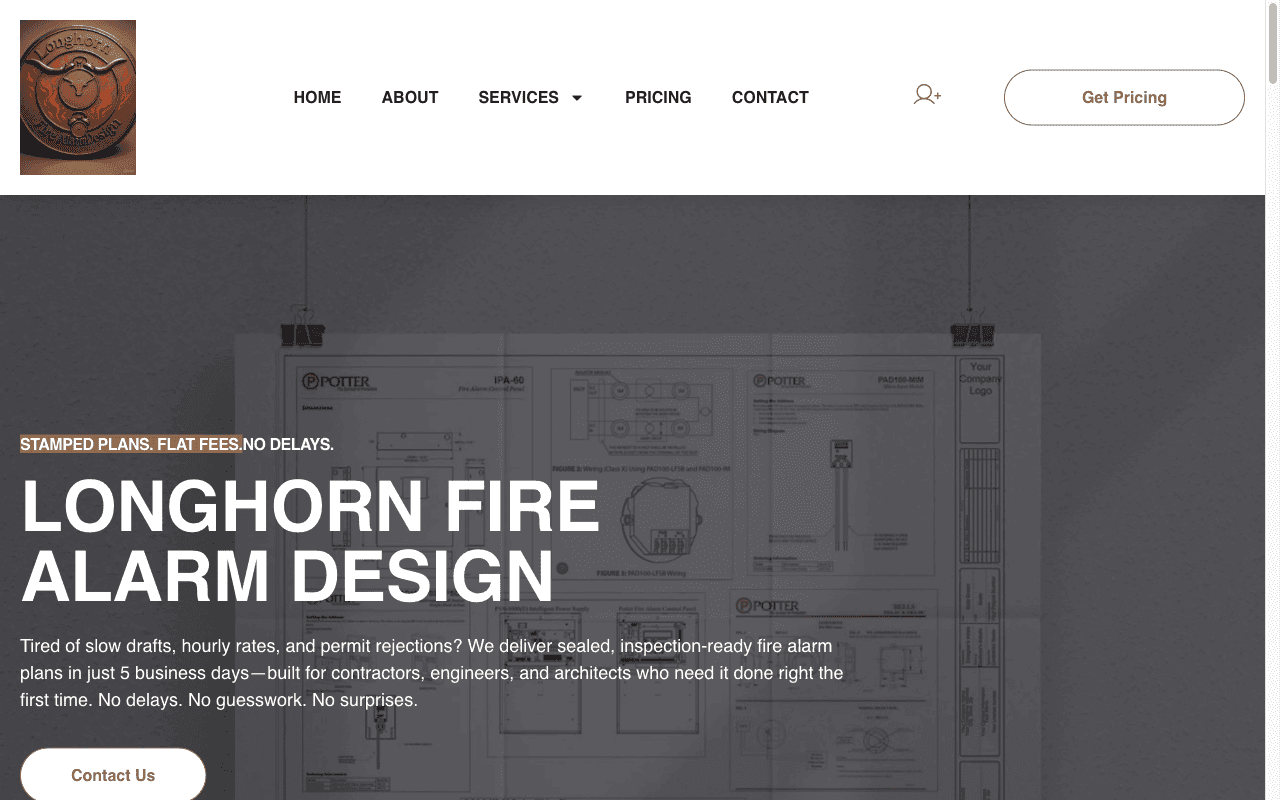
We built a professional services site centered on credibility: NICET certifications, state licensing, insurance documentation, and project type experience are all prominently featured above the fold. The design communicates that Longhorn operates at the level of professionalism that commercial clients require for vendor qualification.
Dedicated service pages were built for each offering (design, installation, inspection, and monitoring) with enough technical detail to satisfy a facilities manager or general contractor evaluating the site before reaching out. Each page explains not just what the service is, but what Longhorn's specific approach is and what clients should expect from the engagement.
A project portfolio organized by system type and building classification (addressable systems, conventional systems, high-rise installations, suppression systems) was built to demonstrate hands-on experience across the full range of building types Longhorn serves. A 24/7 emergency service line was added prominently to the site header, because fire system issues don't follow business hours.
How we built it
From first call to live site, here is how Longhorn Fire Alarm Design’s project came together. It’s the same process every client goes through.
Discovery
Certification documentation review, project type taxonomy by system and building classification, and service geography mapping for bid-area coverage.
Design & Build
Professional services site built with credential showcase, separate service pages per offering, system-type project portfolio, and emergency contact header.
Review & Refine
Longhorn reviews NICET certification display, portfolio accuracy by building type, quote form routing, and emergency line placement.
Launch
Site launched with service area schema markup configured, Google Business Profile updated for commercial clients, and portfolio live with system-type filtering.
What we built
Every feature below is included at $99/month, no add-ons, no surprises.
- Service pages (design, install, inspect)
- Quote request form
- Project portfolio
- Certifications & credentials page
- Service area information
- Mobile-responsive design
- Contact info & emergency line
- Google Maps integration
B2B service companies win bids during the vendor qualification stage
In commercial fire protection, the sales cycle often begins weeks before a contractor ever receives a formal RFQ. Facilities managers and general contractors build their approved vendor lists in advance, and a company that doesn't appear on that list when a project gets scoped isn't competing for that contract, regardless of price or capability. The website is the primary tool that determines whether a company makes it onto the list. Certifications need to be visible. Service scope needs to be clearly defined. Project history needs to be organized by building type so that a healthcare facilities manager can verify relevant experience without calling for a reference. Longhorn Fire Alarm Design's site was built to win during qualification, not just during quoting.
“CalTech Web gave us the professional look we needed. Clients take us seriously when they see our website, and the quote requests come in regularly.”